
Beyond the Daily Grind: How the Motorcycle Reveals the True Self, One Ride at a Time.
I’ve stood in front of the bathroom mirror on a Wednesday morning and seen a person I barely recognize. A face etched with the anxieties of bills, the fatigue of a restless night, and the dull weight of expectations. That’s the “me” who navigates spreadsheets, feigns enthusiasm in meetings, and tries to keep all the plates spinning. That’s the person who sometimes feels a profound sense of loneliness, even in a crowded room.
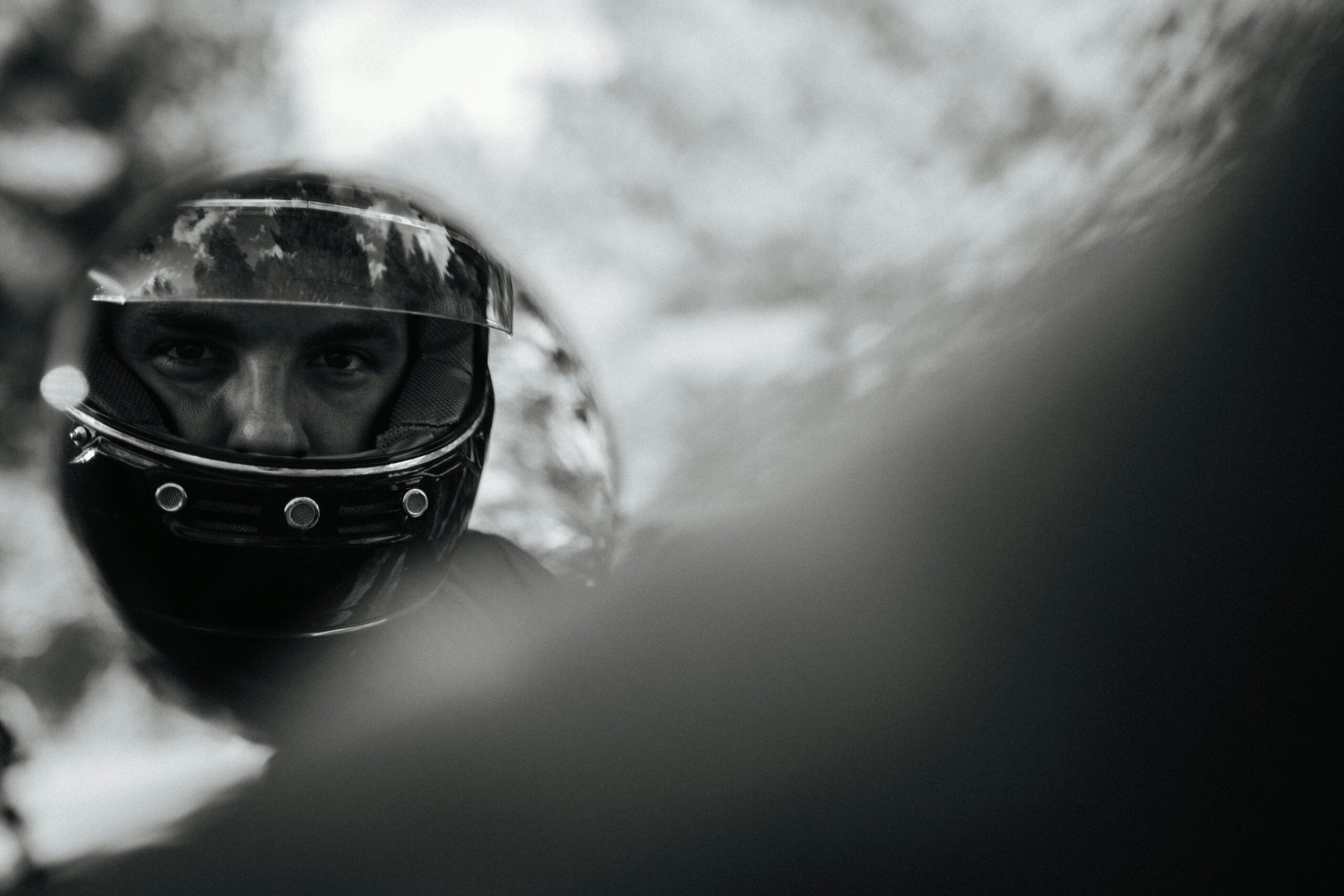
But then, the ritual begins. The worn leather jacket, the heavy boots, the gloves—each piece a layer shed, a transformation initiated. And then, the helmet. The moment that visor clicks into place, something shifts. The reflection in the mirror is gone, replaced by a dark, anonymous shield. And behind that shield, the “other me” wakes up.
The Unveiling: Shedding the Skin of Expectation
In daily life, I’m a mosaic of roles and responsibilities. I am a son, a colleague, a friend, a neighbor. Each interaction comes with an unspoken script, a set of social cues I’m expected to follow. These roles, while necessary, can be exhausting. For someone quietly wrestling with mental health, the pressure to “perform” happiness or competency can be overwhelming, leading to a profound sense of inauthenticity. The person in the mirror is often a carefully constructed façade.
But the motorcycle demands authenticity. It doesn’t care about your job title, your social anxiety, or your relationship status. It only responds to your direct inputs: the subtle flex of your wrist on the throttle, the precise lean into a curve, the constant vigilance for road hazards. There’s no room for pretense. In that moment, the noisy internal monologue about who I should be fades, replaced by the primal, unfiltered self that simply is. The bike cuts through the static of daily life, leaving only the essential.
This shedding of identity isn’t merely escapism; it’s a form of vital psychological decompression. It’s a chance to step away from the relentless pressure of external validation and reconnect with an internal locus of control. The person in the helmet doesn’t seek approval; they seek the next corner, the perfect line, the simple satisfaction of a smooth downshift. This unburdening allows a part of the self — often buried under layers of stress and societal demands — to surface and breathe.
The Anonymous Hero: Power, Skill, and Invincibility
Behind the helmet, I am anonymous. I am genderless, ageless, and unbound by the labels that define me off the bike. To the other drivers, I am simply “a rider,” a fleeting blur of leather and chrome. This anonymity is incredibly liberating. It dissolves the social pressures and self-consciousness that often plague those struggling with anxiety or low self-esteem.
In this anonymity, an alter ego emerges; one that is competent, decisive, and powerful. The machine amplifies these qualities. I am suddenly capable of accelerating with exhilarating force, leaning into gravity-defying turns, and navigating complex traffic with precision. These are real, tangible skills that translate into a profound sense of self-efficacy. When the person in the mirror feels weak or ineffective, the person in the helmet is a master of their domain.
This feeling of power isn’t about aggression; it’s about competence. It’s about the tangible proof that I can control a powerful machine, make split-second decisions, and emerge successful from potentially risky situations. For someone battling self-doubt, this experience is a potent antidote. It’s a reminder that beneath the vulnerability, there lies a core of strength and capability. The helmet becomes a kind of confidence filter, allowing me to fully inhabit that powerful alter ego, even if just for the duration of the ride.
The Honest Conversation: Facing the Self on the Open Road
The solo ride is often perceived as a retreat from one’s problems. And in many ways, it is. But it is also a unique arena for confronting them. In the quiet roar of the engine and the rhythmic blur of the scenery, the external world recedes, and the internal world comes into sharp focus. With the distractions of screens and conversations stripped away, the thoughts I’ve been trying to outrun often catch up.
But here’s the crucial difference: on the bike, these thoughts are less overwhelming. The “Flow State” demands just enough attention to keep me grounded in the present, preventing the rumination from spiraling out of control. It’s like having a difficult conversation with myself, but with the calming, constant hum of the engine as a backdrop. Problems are processed not with frantic anxiety, but with a detached, almost meditative clarity.
This is where the “therapy” truly happens. The rhythmic motion and constant sensory input create a unique mental space where complex emotions can be untangled. I’ve found solutions to problems, gained perspective on difficult situations, and even simply accepted uncomfortable feelings, all while leaning through a sweeping curve or watching the kilometers tick by. The alter ego in the helmet isn’t just powerful; it’s also remarkably honest, allowing me to confront the person in the mirror with a newfound sense of clarity and courage.
The Return: Bridging the Two Selves
When the ride is over, and the helmet comes off, the shift back to “normal” life can be jarring. The familiar anxieties might try to creep back in. But something has fundamentally changed. The person who dismounts the bike isn’t exactly the same person who started it.
The alter ego in the saddle leaves behind more than just memories of a good ride. It leaves behind a residue of confidence, a renewed sense of focus, and a quiet affirmation of self-worth. The anxieties are still there, but they’ve been diluted, rearranged, and often, diminished by the sheer visceral experience of being alive and in control. The act of riding helps to integrate these two selves, reminding the “person in the mirror” that the strength and calm of the “person in the helmet” are always within reach.
It’s a powerful reminder that the person you struggle to recognize in the mirror isn’t the only you. There’s another version, perhaps a truer version, waiting patiently for the ignition to turn, for the engine to roar, and for the visor to drop.
The View from the Helmet
For me, the motorcycle is more than a machine; it’s a portal. It’s a way to access a vital, powerful, and often clearer version of myself that gets lost in the noise of daily existence. It’s a space where the battles with my own mind become manageable, and where the sense of self, however fragmented, can begin to heal.
So, the next time you feel the weight of the world, remember that alter ego waiting for you.
What part of your identity does the motorcycle unveil? Do you find a sense of freedom, strength, or quiet focus when you ride that you struggle to find in your daily life? I’d genuinely love to hear how your bike helps you connect with your truest self.
Leave a Reply