
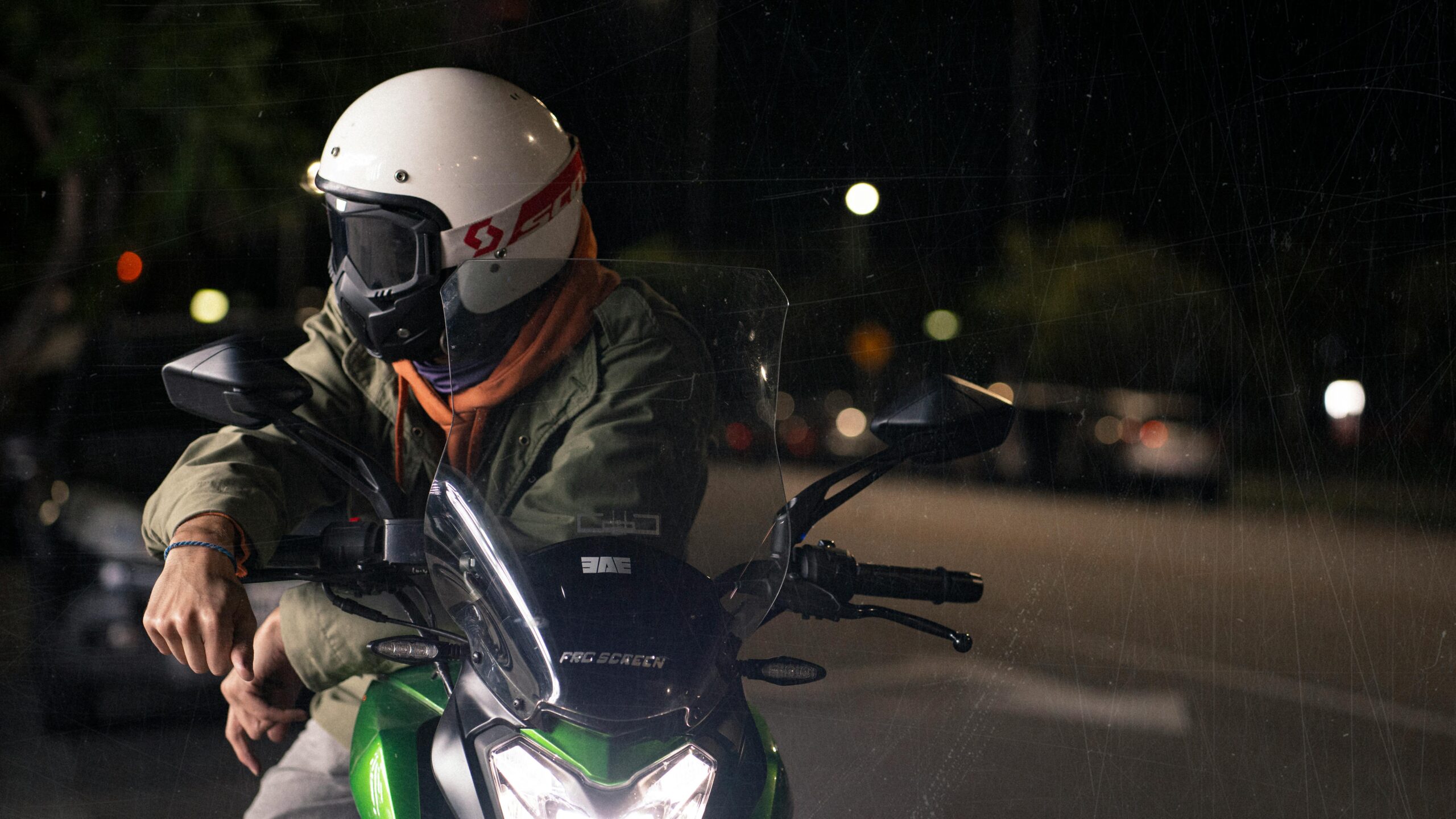
How Solitude on Two Wheels Becomes a Tool for Healing, Focus, and Reclaiming Control.
The feeling of a heavy mind is something I’ve navigated more times than I care to admit. When depression settles in, it doesn’t just feel like sadness; it feels like a thick, grey fog that dampens every sense and makes the simplest tasks feel like wading through deep water. For those of us who ride alone, without the safety net of a weekend group or a local “crew,” the isolation of mental health struggles can feel amplified by the silence of the garage.
However, I’ve found that the very thing that makes riding “lonely” to an outsider is what makes it a lifeline for me. It is a tactical retreat. It is a way to turn the static of a struggling mind into the clear, sharp frequency of the open road.
In the middle of a depressive episode, the internal monologue is a relentless loop of rumination. It’s a closed-circuit television playing your worst moments on repeat. For a solo rider, these moments aren’t easily shared. You are alone with your thoughts, and in the quiet of a house or an office, those thoughts can be suffocating.
But the moment I click my visor shut, the world changes. The helmet isn’t just safety gear; it’s a sensory deprivation tank for the “black dog” and a high-definition amplifier for the present moment.
The Neurobiology of the Twist
It’s easy to dismiss “wind therapy” as a simple cliché, but the science behind it is surprisingly deep. A study by the UCLA Semel Institute for Neuroscience found that riding a motorcycle for just 20 minutes can decrease cortisol levels — the body’s primary stress hormone — by 28%. For someone dealing with the chronic “high alert” state of anxiety or the crushing weight of depression, this is a physiological jump-start.
Beyond cortisol, there is the “Dopamine Hit” of mechanical mastery. When I ride, my brain is constantly rewarded for small, successful inputs. Every perfect downshift, every smoothly executed corner, and every micro-adjustment in traffic sends a signal of “efficacy” to the brain. In a state of depression, where you often feel useless or stagnant, these tiny mechanical victories provide a much-needed stream of positive feedback that the brain simply isn’t producing on its own.
Furthermore, riding acts as a form of Proprioceptive Input. Depression can make you feel “numb” or disconnected from your own body. The vibration of the engine, the resistance of the wind against your chest, and the G-forces in a turn force your brain to acknowledge your physical existence. It pulls you out of the abstract “headspace” and firmly back into your skin. You aren’t just a thinking entity plagued by dark thoughts; you are a physical being interacting with a dynamic environment.
Solitude vs. Isolation: The Great Shift
There is a profound psychological difference between isolation and solitude. Isolation is a cage; it’s the feeling of being disconnected from the world against your will. Solitude, however, is a resource. It is a chosen state where you can finally hear yourself think without the interference of external expectations.
When I head out for a solo ride, I am actively transforming my isolation into solitude. In a car, you are a passive observer — a passenger in a climate-controlled box that allows your mind to wander back into its dark loops. On a bike, that passive luxury is gone. You feel the temperature drop when you pass a river, you smell the rain on the pavement before you see it, and you feel every texture of the road. This sensory bombardment is a grounding technique that leaves no room for the “what ifs” of the past or the “how will I” of the future.
This solitude also serves as a protective barrier. The helmet and the gear create a literal and figurative “second skin.” Inside that gear, I don’t have to be a professional, a partner, or a friend. I am simply a rider. This temporary suspension of identity is incredibly healing for those of us who feel the “performance” of daily life is what’s exhausting us. In the solitude of the ride, I am allowed to just be, without the need to explain my mood or justify my silence to anyone.
The “Flow State” as a Mental Reset
Psychologists often refer to the “Flow State” as that perfect intersection where a challenge meets your skill level, and time seems to disappear. Riding is a high-stakes flow state. You cannot afford to ruminate on a failed project or a broken relationship when you are trail-braking into a tight corner or scanning for road debris.
The visual scanning involved in riding — the constant, rhythmic movement of the eyes from the horizon to the apex to the mirrors — actually mirrors the mechanics of EMDR (Eye Movement Desensitization and Reprocessing) therapy. EMDR uses bilateral eye movements to help the brain process traumatic or “stuck” thoughts. While I’m not a therapist, I can tell you that the rhythmic “left-right-center” scanning of a winding road feels like it “unsticks” my brain. It forces the analytical side of my mind to stay busy, which finally allows the emotional side to rest and reset.
Additionally, the “Immediate Consequence” of riding provides a clarity that depression often obscures. In a depressive slump, the consequences of life feel abstract and far away. On a bike, they are immediate and binary. This resets the brain’s priority list. It forces a hierarchy of needs where “staying upright” and “navigating this curve” sit at the top, pushing the existential dread further down the list. This mental reorganization is a powerful tool for regaining a sense of perspective when everything else feels equally overwhelming.
Reclaiming Agency
Depression often strips away your sense of agency, leaving you feeling like a passenger in your own life. You feel like things are happening to you rather than you happening to the world. On a motorcycle, that dynamic is reversed. I am the absolute authority on that machine. Every gear change, every lean angle, and every line I choose through a turn is a deliberate expression of my will.
This sense of control is restorative. When I manage a difficult ride through bad weather or navigate a complex route, I am proving to myself that I am still capable of mastery. This “mechanical symbiosis” — the feeling of the bike responding perfectly to a subtle flick of my wrist — rebuilds the belief that I can make a difference in my environment. It’s a small-scale victory that I can carry back into my “real” life.
Finally, there is the “Small Wins” momentum. On days when I can barely find the energy to get out of bed, the act of gearing up is the first battle won. Putting on the boots, the jacket, and the gloves is a ritual of preparation for a challenge. Completing the ride, no matter how short or simple, is a tangible accomplishment. It provides a baseline of “I did this” that the brain can use as a foundation to build on for the rest of the day.
The View from the Helmet
If you are reading this and you are currently in a place where the world feels grey and the bike is gathering dust because you can’t find the “spark” to ride, please know that I see you. You don’t need a group of ten friends or a cross-country epic to justify your place on the road. Sometimes, the most important journey is just the twenty-minute loop around the neighborhood to remind yourself that you can still breathe.
The road doesn’t care about your diagnosis, your mistakes, or your bank account. It only cares about how you handle the next 100 meters. And sometimes, that simple, honest demand is exactly the kind of therapy we need.
What does “helmet time” mean for you? Does the mechanical focus help you quiet the noise, or do you find that the solitude of the road is where you do your best processing? I’d love to hear how two wheels have helped you navigate your own quiet battles.
Leave a Reply