
Navigating the Winter Tire Law, the Hunt for the “Snowflake,” and the Physics of Cold Rubber.
It’s January 15th. In any other city, this might just be the middle of a cold month. But in Montréal, today is a milestone. If you listen closely, you can almost hear the collective sigh of thousands of riders staring out their windows at the snow-clogged streets of the Plateau or the South Shore.
We are exactly two months away from March 15th.
In the rest of the world, spring is a vague concept tied to the equinox. In the Province of Québec, spring is a legal mandate. March 15th is the day the winter tire law expires, and for most of us, it’s the unofficial “New Year’s Day” of the riding season.
The Law: Why We Wait
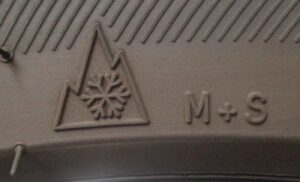
Since 2008, Québec has been the only jurisdiction in North America to mandate winter tires. Specifically, from December 1st to March 15th, every passenger vehicle and motorcycle registered in the province must be equipped with tires bearing the “Three-Peak Mountain Snowflake” (3PMSF) symbol.
The reasoning wasn’t just bureaucracy; it was biology. Or rather, the biology of rubber. Traditional “summer” or even “all-season” tires begin to harden as soon as the mercury dips below 7°C. By the time we hit a typical January morning in Montréal (-15°C), a standard motorcycle tire has the structural integrity and grip of a hockey puck.
The law was a response to a grim reality: accidents involving vehicles on summer tires were vastly over-represented in winter statistics. After the mandate was introduced, the government saw a nearly 5% reduction in serious road injuries. But for the two-wheeled community, this safety measure created a massive technical hurdle.
The Search for the “Unicorn” Tire
For car owners, getting winter tires is a trip to Costco. For a moped or motorcycle rider, it’s a global scavenger hunt.
Finding a tire that is (a) the correct size, (b) rated for the weight of your bike, and (c) bears that legal snowflake symbol is incredibly difficult. Most major manufacturers simply don’t see the market for it in North America. Furthermore, as many of us know — especially those riding modern electric mopeds like the NIU NQi GTS — our bikes often have staggered sizes. You can’t just buy a “set.” You’re often hunting for a 90/90-14 for the front and a 110/80-14 for the rear from two different warehouses across the ocean.

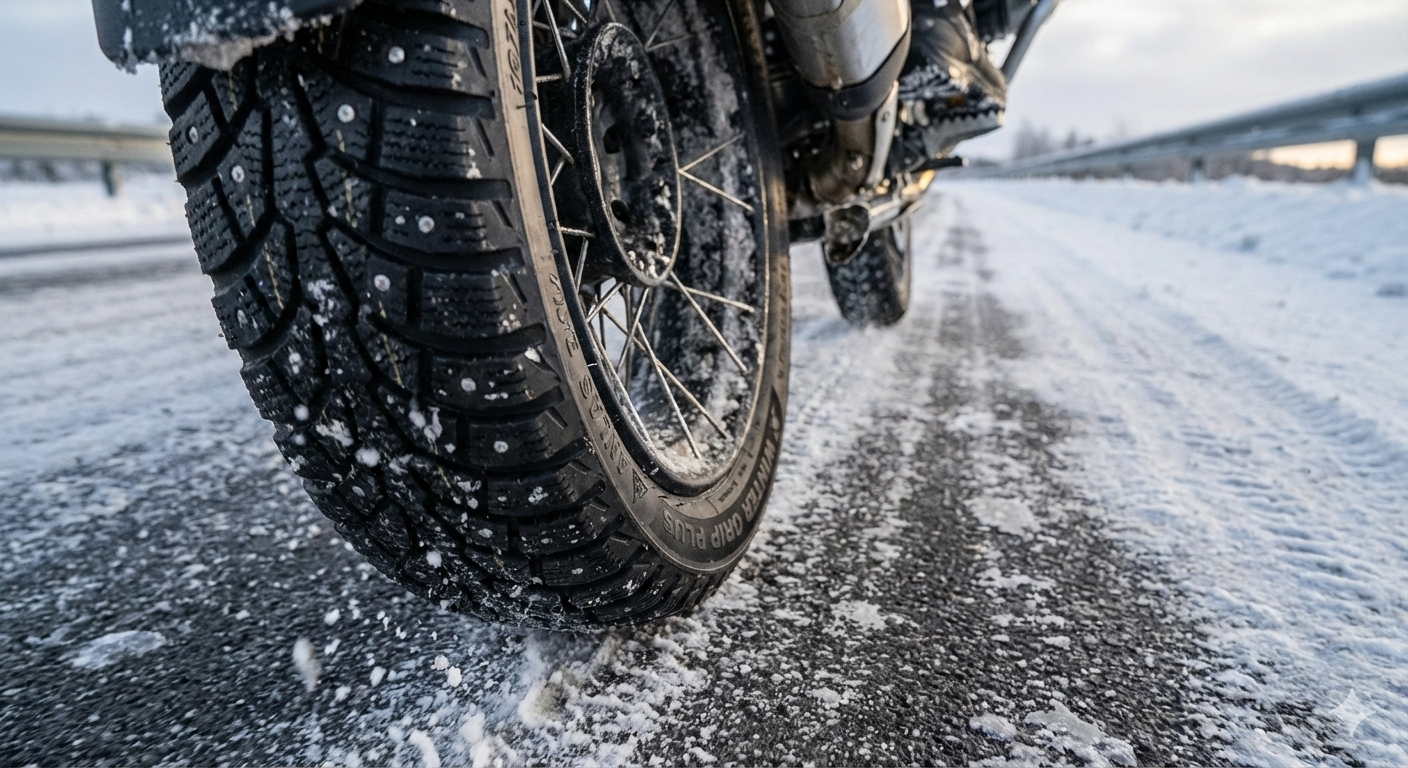
There is one name that usually saves the day: Anlas. Based in Turkey, Anlas is one of the few manufacturers that takes the “Winter Grip” seriously. Their Winter Grip 2 and Winter Grip Plus are the gold standards for year-round riders. They use a high-silica compound that stays soft in sub-zero temperatures and a siped tread pattern designed to wick away slush — very similar to what you’d see on a high-end Bridgestone Blizzak for a car.
But quality comes at a price. Between shipping, specialized compounds, and the fact that you’re buying two distinct, niche products, outfitting a bike for winter can easily cost double what you’d pay for a summer set.
Beyond the Rubber: The Physics of the Freeze
Even if you find the tires, the 514 doesn’t play fair in the winter. Riding on snow and ice is a lesson in extreme humility. On a bike, you lose the “safety net” of four contact points. If your front wheel hits a patch of black ice on Sherbrooke Street, the gyroscopic stability of your bike vanishes instantly.
Then there’s the salt. The “Montréal Brine” is a chemical cocktail designed to melt ice, but it’s also designed to eat your bike alive. It gets into the wiring, corrodes the headers, and can seize a chain in a matter of weeks. To ride in the winter here isn’t just a test of skill; it’s a commitment to a rigorous cleaning schedule that most people simply aren’t prepared for.
Furthermore, there is the “numbness” factor. In the summer, your tires communicate through the handlebars, telling you exactly how much grip you have left. In the deep freeze, that dialogue stops. The cold air densifies the oil in your forks and shocks, making the suspension stiff and unresponsive to the micro-textures of the road. You’re essentially riding a rigid machine on a low-friction surface, where every input — whether it’s a tap on the brake or a slight shift in weight — is magnified. There is no “saving it” once the slide starts; you are simply a passenger to the physics of momentum.
Even when the asphalt looks dry, that residual brine leaves behind a deceptive, oily film. This residue is hygroscopic, meaning it actually attracts moisture from the air, turning a seemingly “clear” road into something as slick as a wet kitchen floor. It forces a riding style that is almost robotic: no sudden movements, no aggressive leaning, and a following distance that feels absurd until the moment you actually need to stop. Winter riding in the 514 isn’t about the thrill of the curve; it’s about the surgical precision of survival.
The Countdown Begins
This is why March 15th is so sacred. It represents the return of the “predictable” road. It’s the day we can finally shed the specialized winter rubber and return to the tires that were meant for leaning into curves rather than surviving them.
We have 59 days to go. Fifty-nine days of checking the battery tenders, polishing the chrome, and staring at the calendar. The “Two-Month Itch” is real, but it’s what makes that first ride in mid-March — even if it’s still 4°C and raining — feel like pure magic.
Hold steady, Montréal. We’re halfway there.
Leave a Reply