
With the world on fire again, the choice between gas and electric feels heavier than just range and horsepower.
The news cycle over the past two weeks has been incredibly heavy. With the U.S. and Israel now entrenched in a sprawling conflict with Iran, the headlines are a constant stream of strikes, closures in the Strait of Hormuz, and the inevitable, depressing ripple effect on global markets.
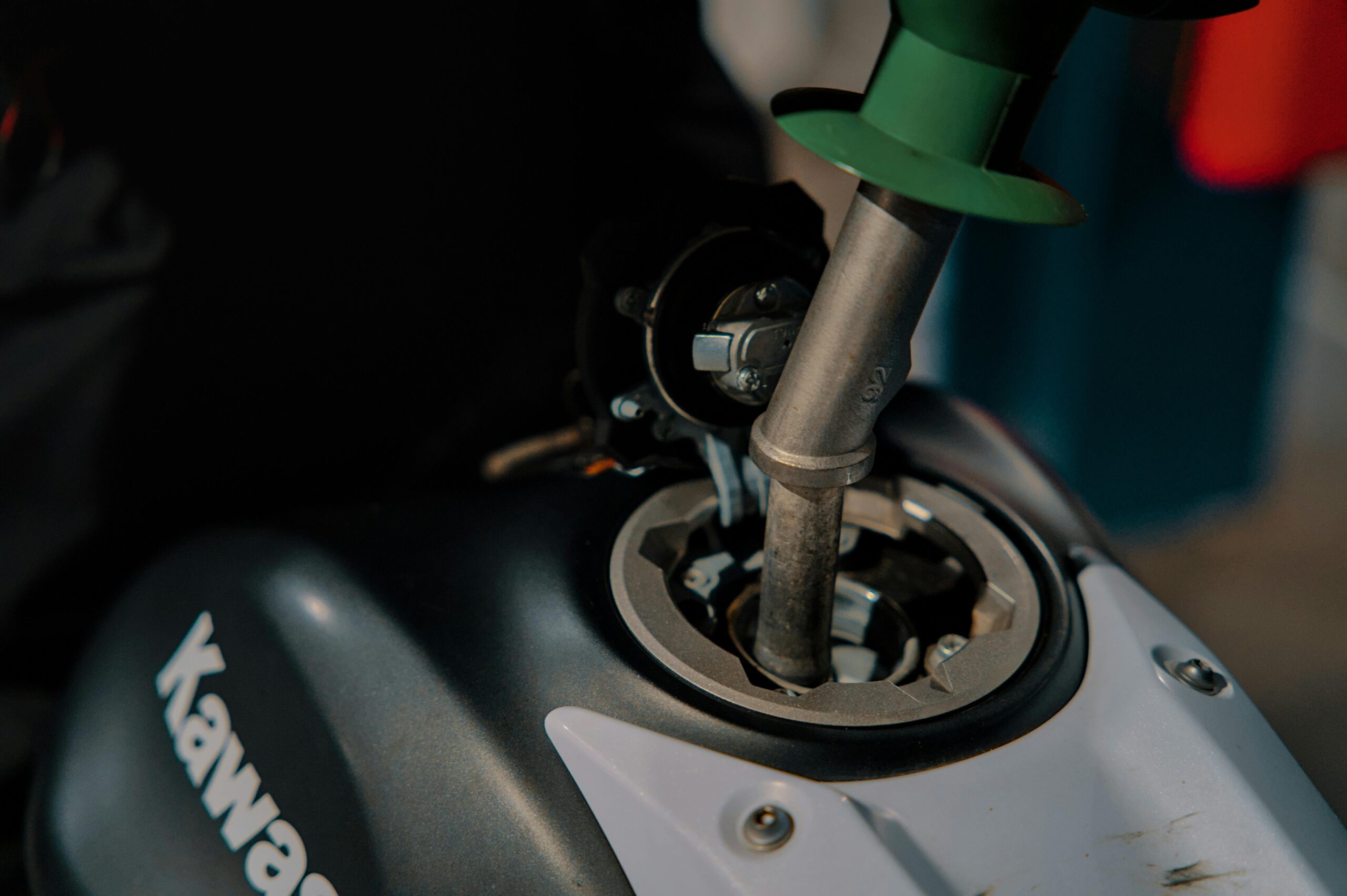
Whenever rockets fly in the Middle East, the numbers on the gas pumps here in Montreal spin a little faster. It forces a realization that the simple act of filling a tank is never really simple; it is tethered to global conflicts and the whims of the elite.
It begs a serious question for those of us on two wheels: In an increasingly unstable world, is electric simply the better path?
Here is my take for this week’s more introspective, heavy-hitting article.
It has been a grim couple of weeks to watch the news. The sudden explosion of conflict in the Middle East, with the U.S. and Israel engaging in a sprawling war with Iran, has cast a long, depressing shadow over the approaching spring.
Aside from the tragic human cost, these global seismic events always send a very specific shockwave down to the local level: the price of oil. Even if the crude refined for our local Montreal gas stations doesn’t come directly from the Persian Gulf, the global oil market operates as a single, highly sensitive organism. When a key waterway like the Strait of Hormuz is threatened, the price of a barrel spikes everywhere.
It’s a stark reminder that when you ride a combustion engine, your freedom is conditionally leased from geopolitics. Every twist of the throttle is inextricably linked to international conflicts, trade embargos, and the whims of the global elite.
Which brings me back to my silent machine sitting in winter storage. Riding an electric moped like the NIU NQi GTS has always been a stylistic and practical choice for me, but lately, it feels like a geopolitical one, too.
Let’s take a deep dive into the realities of both platforms through the lens of the world we currently live in.
The Petrol-Powered Machine: The Tied Soul
There is no denying the romance of the internal combustion engine. For over a century, it has been the definitive symbol of freedom.
The Pros:
- Infinite Range (Effectively): The infrastructure is already built. You can ride from Montreal to Vancouver and never worry about finding a place to refuel.
- The “Two-Minute Recharge”: A splash of gas and you are back on the road. No waiting, no planning, no “charging apps” required.
- The Visceral Experience: The vibration, the sound, the mechanical soul of the machine. For the Technician archetype, mastering the clutch and gears is half the joy of the ride.
The Cons:
- The Invisible Leash: You are entirely dependent on a highly volatile, globally traded commodity. When a politician across the world makes a move, your weekend ride gets more expensive.
- Maintenance Complexity: Oil changes, spark plugs, valve clearances, winterization of fuel lines—combustion requires constant mechanical babysitting.
The Electric Machine: The Localized Grid
When I plug my NIU into the wall, the power flowing into its lithium-ion cells isn’t dictated by overseas conflicts. Here in Quebec, our electricity is generated by the rivers. It is hyper-local, publicly owned, and completely isolated from the chaos of the oil market.
The Pros:
- Geopolitical Independence: The price of electricity is stable. It doesn’t spike when an embassy is evacuated or a shipping lane is closed. The energy is domestic.
- The Silence: As an Introspective Minimalist, the lack of engine noise is a feature, not a bug. It strips away the mechanical aggression and leaves only the wind and the road.
- Zero Drivetrain Maintenance: No oil, no belts, no spark plugs. Just brake pads and tires. It is true minimalist ownership.
The Cons:
- The Range Tether: You have to plan your life around your battery capacity. A spontaneous 300km detour simply isn’t possible without significant logistical planning.
- The Waiting Game: Refueling takes hours, not minutes.
- The Cold Reality: As we discussed in my last post, electric batteries despise the cold. The harsh Montreal winters don’t just keep EVs off the road; they actively drain the efficiency of the cells if exposed to sub-zero temperatures.
The Final Tally
Choosing to ride electric doesn’t solve the world’s problems, but there is a distinct, quiet comfort in knowing that the cost of your Sunday ride isn’t funding a global crisis. The silence of the EV isn’t just an absence of exhaust noise; it’s an active disengagement from the oil machine.
But I know I’m in the minority. The internal combustion engine is deeply ingrained in motorcycle culture, and giving up the roar of an exhaust is a bridge too far for many.
Where do you stand? Does the current global instability make you look at electric bikes differently, or is the soul of a gas engine worth the volatility at the pump? Let me know in the comments.
Leave a Reply