
Navigating the Grit, the Glory, and the Five-Month Hibernation of the 514
The January Silence
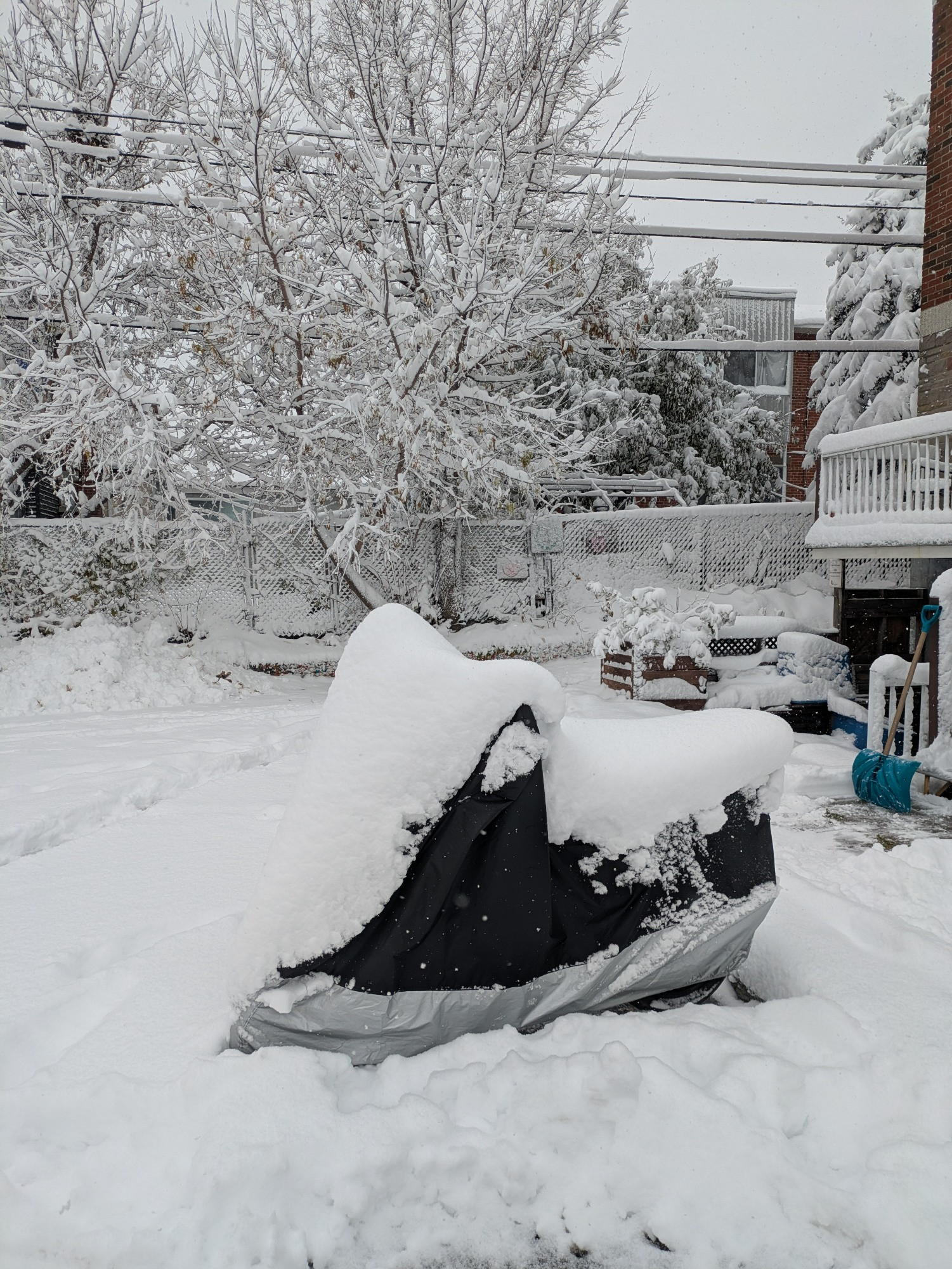
It is January 2nd. Outside, the city is a monochromatic landscape of salt-stained slush and frozen iron. If you walk down a residential street in the Plateau or Rosemont, you will see them: ghost-like shapes huddled under heavy-duty tarps, chained to staircases or tucked deep into the shadows of backyard carports. These are the hibernating machines of Montréal — the motorcycles and mopeds that, for six months of the year, provide the heartbeat of our city’s streets.
For the uninitiated, this is “the off-season.” A time to forget about two wheels and embrace the metro or the SUV. But for those of us who live for the twist of a throttle, January is not a void. It is a season of quiet intensity. It is the time when the riding moves from the asphalt into the mind, the sketchbook, and the heated garage.
Welcome to the launch of this blog. We are starting here, in the dead of winter, because you cannot understand the Montréal riding scene without first understanding the wait. In cities with year-round sunshine, riding is a utility. In Montréal, it is a precious, finite resource. And because it is scarce, we value it more than anyone else on the continent.
The Geography of a Mechanical Soul
Montréal is a city of neighborhoods, and each one has a specific “exhaust note.” To ride here is to navigate a cultural map that shifts as quickly as the gears in your transmission.
Take the Plateau and Mile End. This is the global epicenter of the moped renaissance. These aren’t the sleek, plastic scooters you see in Mediterranean tourist traps. These are vintage, pedal-start, two-stroke machines — Puchs, Tomos, and Motobécanes. They are the mechanical equivalent of a vinyl record: finicky, tactile, and deeply soulful. In the summer, the air in these neighborhoods smells faintly of pre-mix oil and wood-fired bagels. The moped is the king of the “Ruelle.” It is the only vehicle that feels perfectly scaled for our historic alleyways, allowing riders to bypass the gridlock of Saint-Denis in a blue cloud of nostalgia.
Contrast that with the industrial grit of Saint-Henri or the Lachine Canal, where the custom scene thrives. Here, in old textile factories turned into workshops, the “brat style” builds and cafe racers are born. Montréal has a massive community of artists and designers, and for them, the motorcycle is the ultimate canvas. You see it in the meticulous attention to detail — the hand-stitched leather seats, the custom-fabricated fenders, and the vintage tanks saved from scrap heaps in the Eastern Townships.
Then there are the urban specialists who haunt the downtown core. These are the riders of hyper-motards and nimble naked bikes who treat the city’s legendary construction zones like a technical trials course. To ride downtown Montréal is to engage in a constant, high-stakes dance with the “Orange Army.” Our city is famous for its cones, its metal plates, and its potholes that could swallow a front tire whole. This environment has bred a specific breed of rider: one with lightning-fast reflexes and a sixth sense for traction.
The Ritual of the Winter Wrench
Because we are forced off the road for five months, the Montréal rider becomes a part-time mechanic by necessity. When the temperature drops below zero, the “Winter Wrench” begins. This is the season where the kitchen table becomes a workbench. It’s not uncommon in this city to find a vintage Honda engine being rebuilt in a second-story apartment, or a set of carburetors being cleaned in an ultrasonic cleaner next to the toaster.
We spend these months hunting for parts on Kijiji, Marketplace, and specialized forums. We trade advice on how to handle the humidity of a Québec winter and how to keep rust at bay. This period of hibernation is what makes our community so tight-knit. We aren’t just riding together; we are surviving the winter together. The “winter itch” is a collective experience—a shared restlessness that peaks around late February when the first motorcycle show hits the Palais des congrès and we all gather just to sit on seats and dream of the thaw.
The Price of Admission
We have to talk about the grit, and that includes the SAAQ. It is no secret that Québec is one of the most expensive places in the world to be a motorcyclist. We pay staggering registration fees for a “season” that is often interrupted by late-April snowstorms or early-October frosts. We pay for 12 months of insurance and registration but only get to use about 180 days of it.
But there is a strange pride in that cost. It acts as a filter. The people you see on two wheels in Montréal aren’t there because it’s cheap or easy. They are there because they cannot imagine being anywhere else. We earn our miles in this province. We earn them through the high fees, through the brutal road conditions, and through the unpredictable weather that can go from a heatwave to a torrential downpour in the span of a lunch break.
The Great Awakening
The reward for all this — the wait, the cost, the cold — is the “Great Awakening.” It usually happens in mid-April. The city finally brings out the big sweepers to clear the winter gravel from the gutters. The first heavy rains wash away the salt. And then, one afternoon, the temperature hits 12 degrees.
You hear it first. A distant four-cylinder scream or the rhythmic thumping of a V-twin echoing off the brick walls of a narrow street. The first ride of the year in Montréal is a spiritual experience. It’s the feeling of crossing the Jacques Cartier bridge and seeing the Saint Lawrence River sparkling below, the wind finally hitting your jacket after months of being bundled in wool.
Suddenly, the Wednesday nights at the Orange Julep don’t seem so far away. The giant orange sphere becomes our North Star, drawing hundreds of us together to stand in the parking lot, drink a Julep, and celebrate the fact that we made it through another winter.
A New Home for the 514 Scene
This blog is a tribute to that resilience. My goal is to document every facet of this culture—from the best “hidden gem” routes through the rolling hills of the Monteregie to the technical guides for keeping your vintage moped running on modern ethanol gas. We’ll profile the builders, review the gear that actually survives a Québec rainstorm, and keep a pulse on the ever-changing laws that affect our passion.
The bikes are currently under covers, and the streets are white with salt. But the engine is already turning over in our minds.
Welcome to the blog. The countdown to Spring starts now.
Leave a Reply